Mental health doesn’t exist separately from the rest of our lives. Our physical health, relationships, housing, financial stability, and even something as fundamental as being able to smile without pain can affect how we feel, heal, and move forward.
At the Huntsman Mental Health Institute’s Kem & Carolyn Gardner Mental Health Crisis Care Center, that understanding is built into the way people are cared for.
One patient’s experience with the Crisis Care Dental Clinic shows what whole-person care can look like.
A place where someone listened
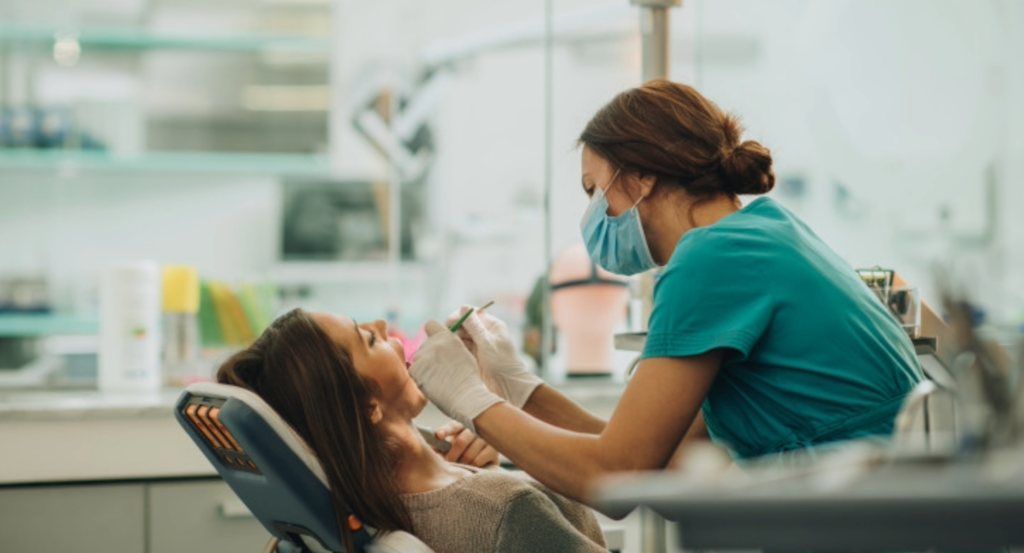
The dental team first met the patient while she was receiving inpatient mental health care. A social worker had requested a dental consultation because she was experiencing significant pain.
She had partial dentures and cavities in the teeth supporting them, making something as simple as removing or replacing her dentures painful. But her concerns went beyond the physical discomfort.
Years earlier, she had experienced dental care where she felt unheard. The dentures she received never felt like her own teeth, leaving her apprehensive about going through the process again.
So before beginning treatment, the dental team did something important: they listened.
They spent time explaining what treatment could look like, answering her questions, and giving her space to talk about her concerns.
Two weeks later, after leaving inpatient care, she returned.
This time, she was participating in substance use treatment and looking forward to a new chapter. She wanted her smile to reflect the positivity she was beginning to feel in her life.
Week after week, she came back for treatment. And week after week, the team saw progress—not only in her oral health, but in her confidence and recovery.
Eventually, she arrived at the clinic with another patient. She had become a mentor in her treatment program and was now helping someone else navigate their own journey.
She was able to reassure them that they had come to a place where people would take care of them.
Later, when she experienced another mental health crisis during recovery, she also knew where to turn. She returned to the Crisis Care Center, received the support she needed, and was able to continue with her program.
Through it all, she kept her dental appointments.
By the end of her treatment, she had something more than a healthier smile. She had greater confidence, trusted relationships, and a care system she knew she could return to when she needed help.
Mental health care is whole-person care
Her experience is one of many that demonstrates what makes the Crisis Care Center different.
Mental health challenges rarely happen in isolation. Someone seeking help may also be experiencing physical health concerns, housing instability, financial challenges, substance use, legal needs, or other barriers that can make recovery more difficult.
The Crisis Care Center is designed to meet people where they are and connect them with resources that address more than the immediate crisis.
Dental care is one part of that approach.
The Crisis Care Dental Clinic measures oral-health-related quality of life when patients begin receiving care. On a scale of 0–20, where 20 represents the greatest impairment, patients average 9 out of 20 when they first arrive, and 20% report scores of 15 or higher.
Those numbers help illustrate something simple but important: oral health can have a meaningful effect on everyday quality of life.
Demand for care has continued to grow. Approximately six months after opening, the clinic expanded its services to include crowns and dentures, and beginning in July 2026, the clinic increased operations to two days each week.
Through philanthropic support from Huntsman Mental Health Foundation, emergency and preventive dental services are also available at no cost to uninsured adult individuals receiving care. Within the first 12 months of opening, the Crisis Care Center served 9,5000 people experiencing mental health crises, including guests from 25 of Utah’s 29 counties. The Center’s crisis stabilization service is operating at 106 percent capacity, while the inpatient service is at 99.6 percent capacity.

Your support makes care like this possible.
When you give to Huntsman Mental Health Foundation, you help remove barriers, expand access, and support innovative programs that care for the whole person—not just the crisis.

Walk in for crisis care
Adults 18+ can walk in 24/7 to our Mental Health Crisis Care Center in South Salt Lake. It’s a safe, supportive alternative to the ER for urgent mental health needs. No appointment is needed.