The Hope Fund
A mental health crisis can happen to anyone.
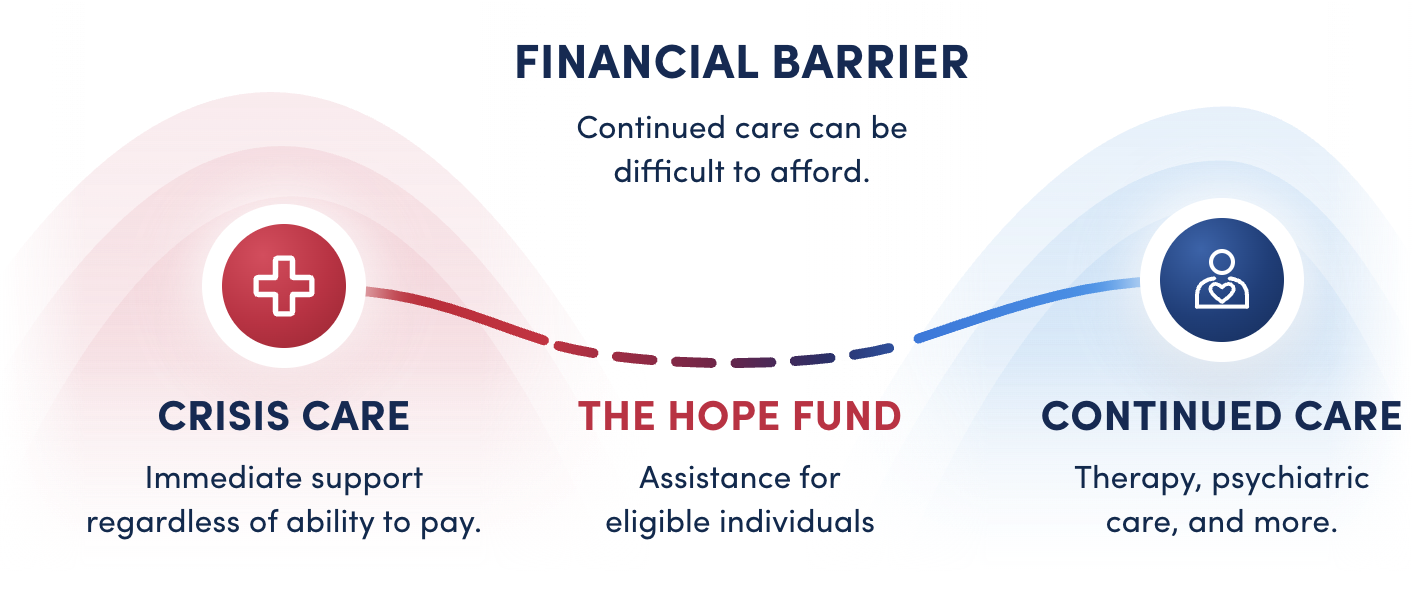
Challenges can build on one another, affecting someone’s mental, physical, and emotional well-being until immediate support becomes necessary. At the Kem & Carolyn Gardner Mental Health Crisis Care Center, people experiencing a mental health crisis can receive immediate care regardless of their ability to pay.
Getting through the crisis is only the beginning. The next steps might be ongoing therapy, psychiatric appointments, or more intensive treatments. For some, that care comes with a cost they simply cannot afford. That’s where the Hope Fund comes in.
More than
60%
of guests served by the Crisis Care Center qualify as low-income and are Medicaid-eligible or uninsured.
The right care can change what happens next.
Through need-based financial assistance, the Hope Fund helps eligible individuals access clinically recommended care when cost stands in the way.
Intensive outpatient programs
Some people need more support than a weekly appointment. Intensive outpatient programs offer structured, more frequent treatment while allowing participants to continue living at home.
Outpatient mental health services
Therapy, counseling, psychiatric appointments, and follow-up care help people stay connected to treatment and work toward lasting stability.
Essential supportive services
For eligible individuals, approved supportive services can address additional challenges that make recovery harder, including needs that extend beyond mental health treatment.

Because life doesn't stop during recovery.
Dental pain, housing concerns, legal challenges, and financial hardship can all make recovery more difficult. At the Crisis Care Center, we connect people with resources that address these broader needs, and the Hope Fund makes the resources more accessible to all.
You can help someone continue their care.
For someone working toward recovery, even a relatively small out-of-pocket expense can stand between them and the treatment they need.
The Hope Fund helps remove these financial obstacles so individuals can continue moving toward long-term stability.



Understanding the path from crisis to recovery.
How does someone qualify for Hope Fund assistance?
What is considered a mental health crisis?
A mental health crisis happens when emotional or psychological distress becomes overwhelming and someone needs immediate support for their safety, stability, or well-being. It can involve severe depression, anxiety, suicidal thoughts, or other symptoms that make daily life difficult to manage.
What happens after someone receives crisis care?
Next steps depend on the person’s needs. They may include returning home with a treatment plan, inpatient care, intensive outpatient treatment, ongoing therapy, psychiatric services, or other supportive resources.
Why is continued treatment important after a crisis?
Crisis care addresses immediate needs. Continued treatment can help someone manage symptoms, address underlying conditions, build coping strategies, and work toward longer-term recovery.
Why might someone need financial help after crisis care?
Even when immediate crisis care is available, follow-up treatment can involve costs someone cannot afford. Insurance limitations, deductibles, and other out-of-pocket expenses can make recommended care difficult to access.
What types of services can the Hope Fund support?
The Hope Fund provides need-based assistance for eligible, clinically recommended services, including intensive outpatient programs, outpatient mental health treatment, and approved supportive services.
How are Hope Fund donations used?
Donations help reduce financial barriers to eligible services so people can remain connected to recommended treatment and support after a mental health crisis.
Together, we’re removing barriers to care.